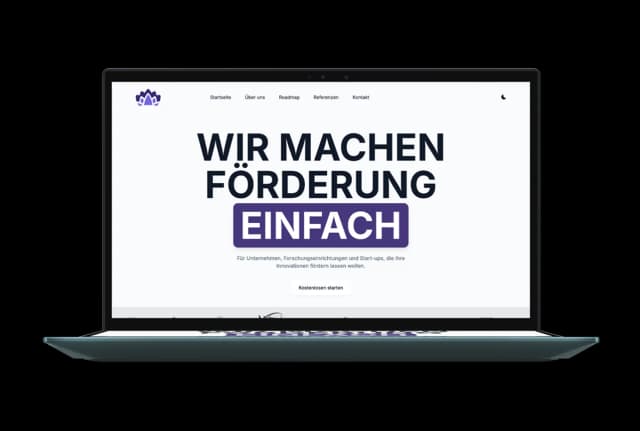
Client: Forschungsmittel.com — R&D funding advisory in Germany.
Industry: B2B consulting, grants, innovation.
Scope: relaunch, architecture, performance, SEO, security, content.
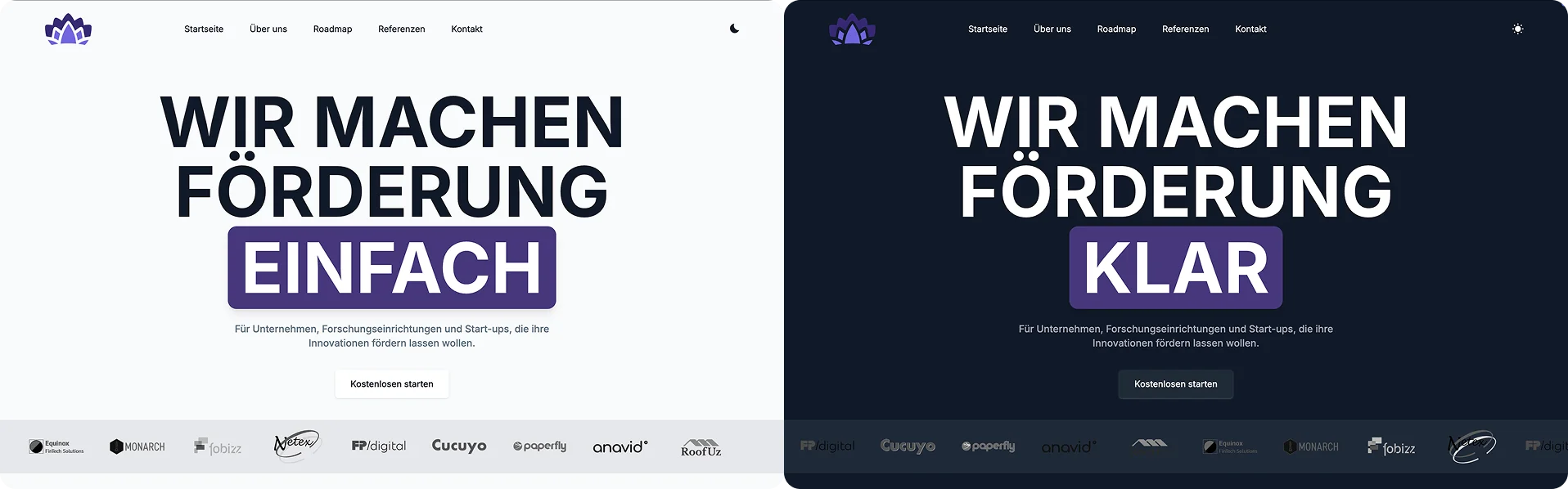
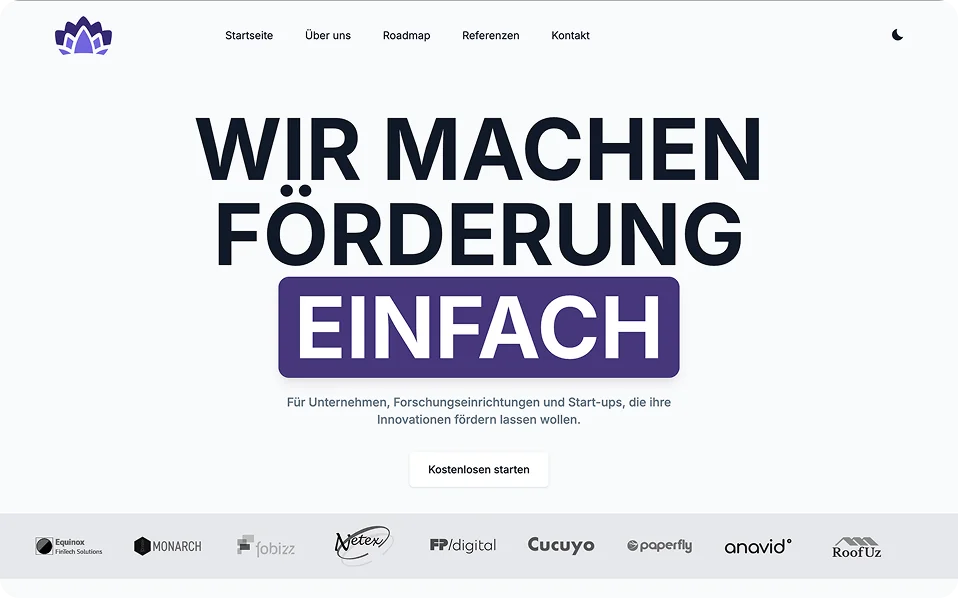
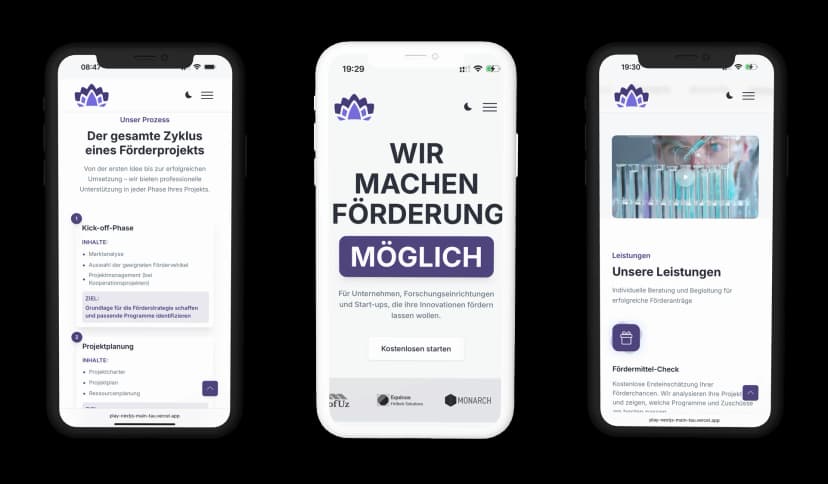
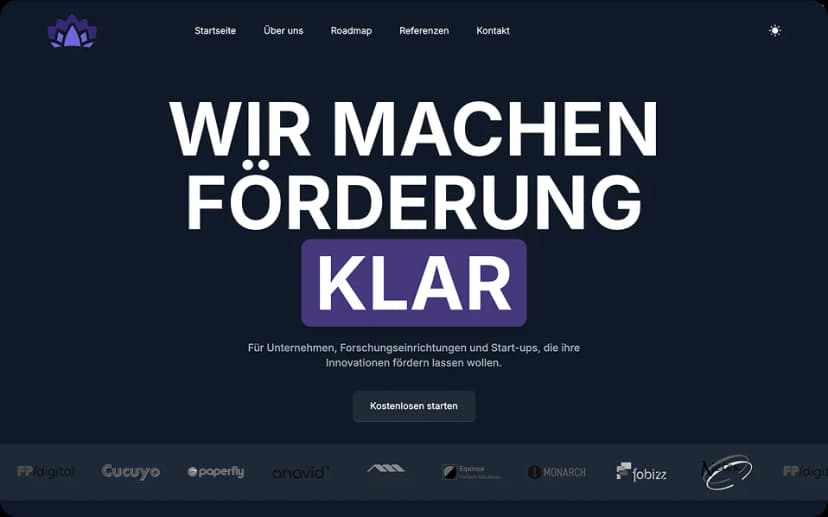
We rebuilt a brochure-style site into a fast funding platform. It behaves like a SaaS product: structured, secure, and built for the full funding journey of enterprises, research teams, and startups.
Decision Context
This project addressed a trust and complexity gap typical for regulated consulting domains.
Advisory services around public R&D funding involve high financial stakes, long decision cycles, and strict regulatory expectations. A traditional brochure-style website is often insufficient to communicate this level of complexity, credibility, and process maturity — especially for enterprise and research stakeholders.
Key considerations at the decision stage:
- Complex funding programmes must be explained clearly without oversimplification or misleading claims.
- Trust needed to be established through structure, performance, and transparency — not marketing language.
- GDPR and German data-protection principles required privacy-by-design at both technical and UX levels.
- SEO visibility had to be built on semantic architecture and intent clarity, not isolated keywords.
- The platform needed to support the full funding journey, from initial research to advisory contact.
The objective was therefore to transform a static consulting website into a product-like digital platform — structured, secure, and designed to guide users through complex decisions in a reliable and compliant way.
Challenge
Forschungsmittel advises on six- and seven-figure funding. The old site did not match that level of trust.
The new platform had to:
- Translate complex funding programmes into clear, approachable content
- Build authority and trust for decision-makers in enterprises and research institutions
- Be designed in alignment with GDPR principles and German data-protection requirements
- Engineered with a focus on achieving strong Core Web Vitals performance under typical mobile network conditions
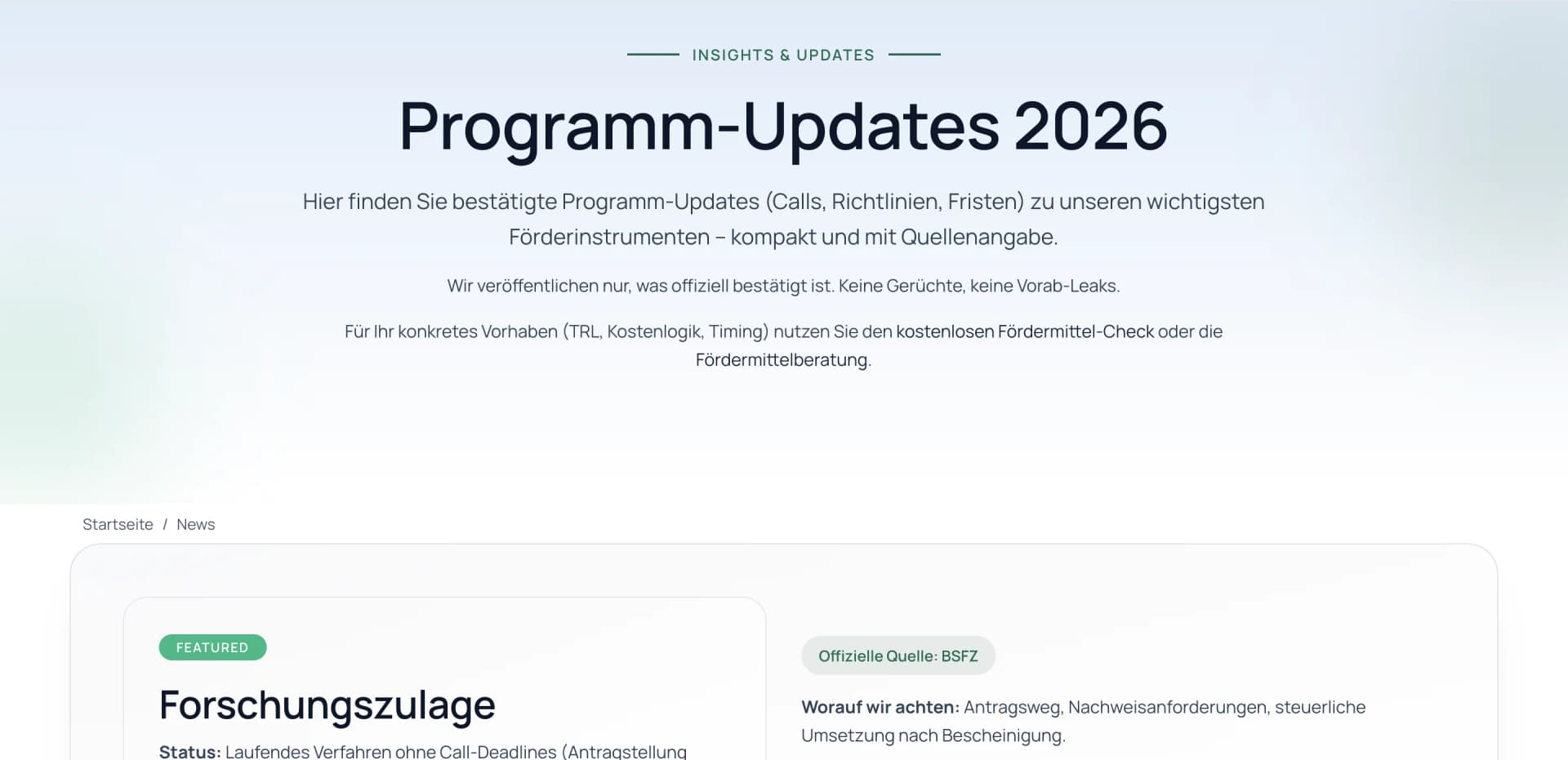
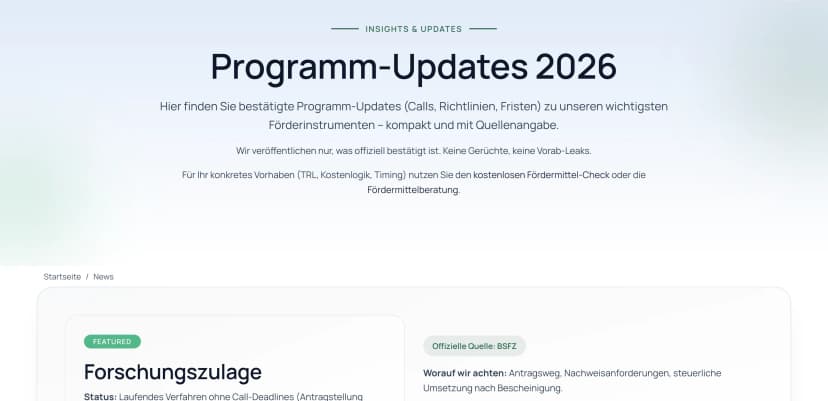
- Support a scalable content & SEO strategy around Fördermittel, Förderprogramme, Zielgruppen and Whitepapers
- Act as a hub for future integrations (CRM, marketing automation, analytics)
In short: it had to feel like a real product, not a PDF.
Our Approach
1. Modern Architecture & Stack
We rebuilt the platform on a modern, type-safe stack:
• Framework: Next.js 16 (App Router, Server Components, Turbopack)
• Frontend: React 19, TypeScript, Tailwind CSS
• Rendering: Hybrid SSR + static generation with ISR
• Animations: Framer Motion
• Hosting: Vercel Edge + global CDN
• CI/CD: Automated pipeline with previews, linting, and Lighthouse gates
Outcome:
• predictable releases
• fast cold starts
• a stack any React/Next.js team can extend
2. Design System & UX: Consulting That Feels Like SaaS
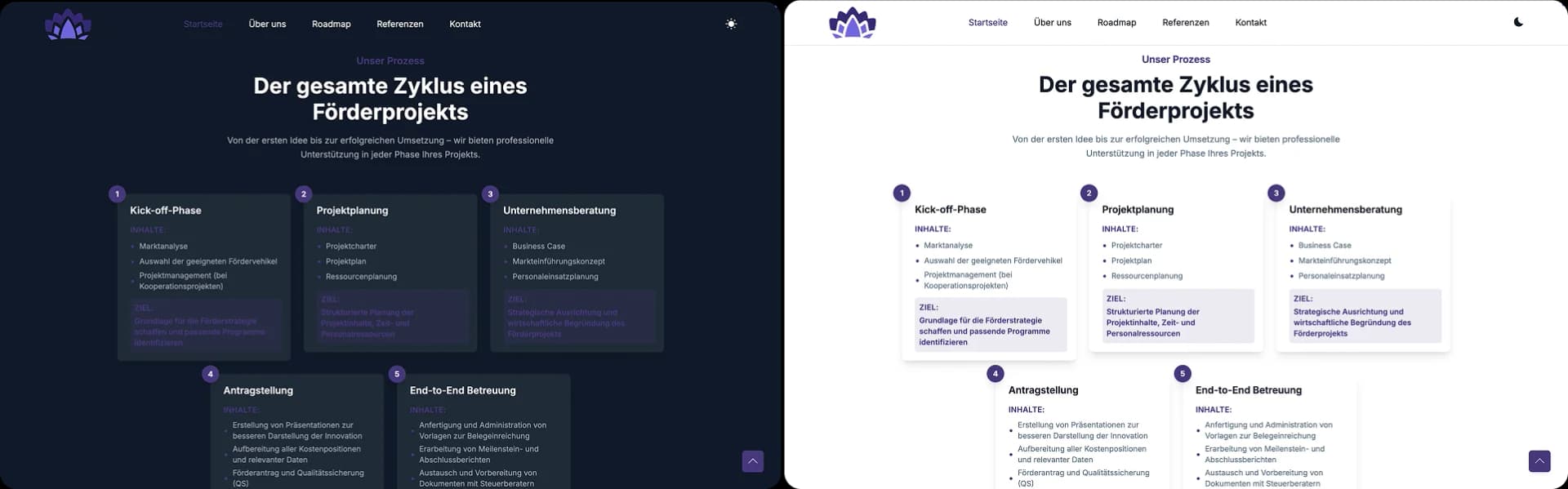
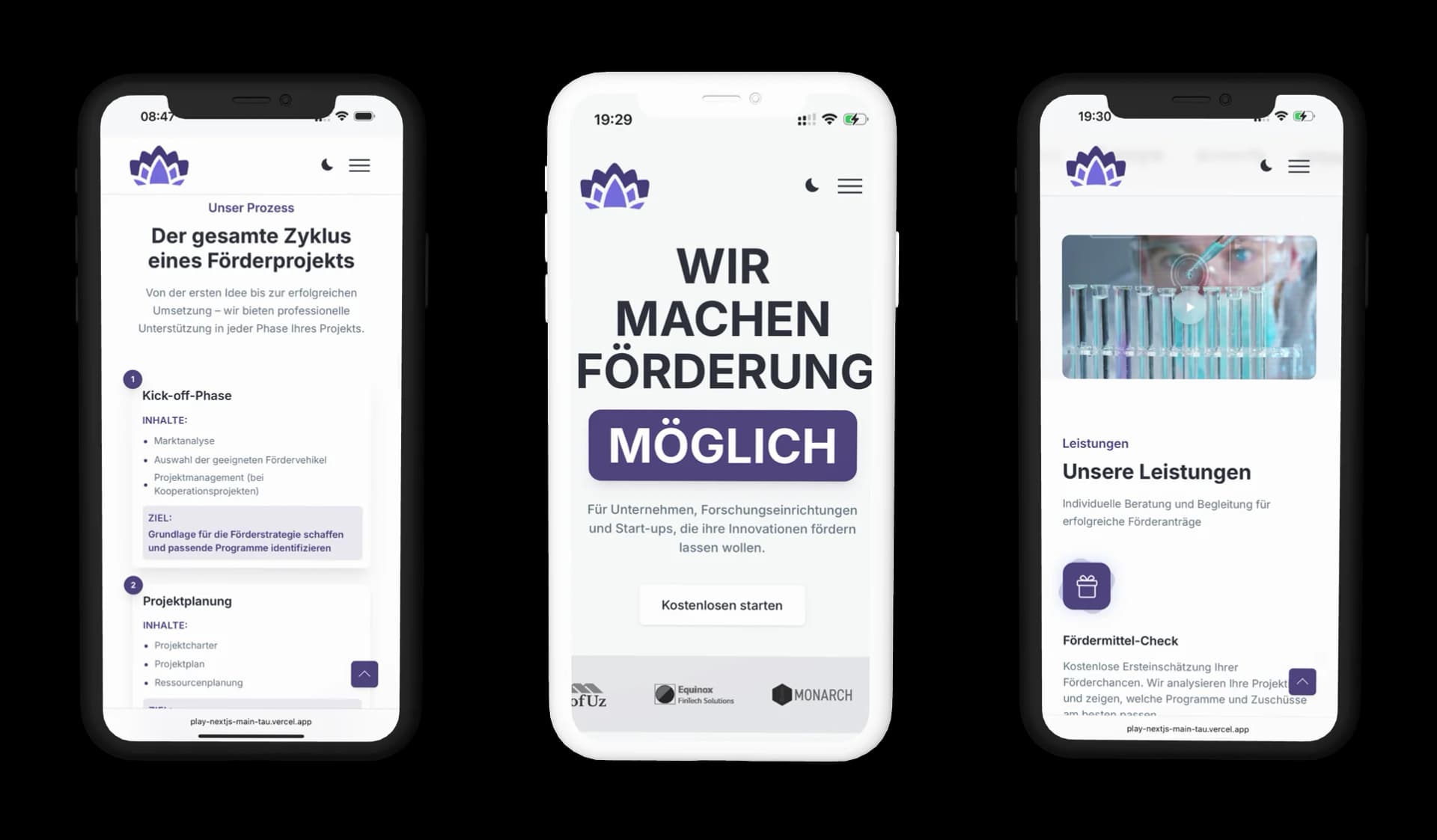
The UX is closer to fintech/SaaS than a typical consulting site.
Key patterns:
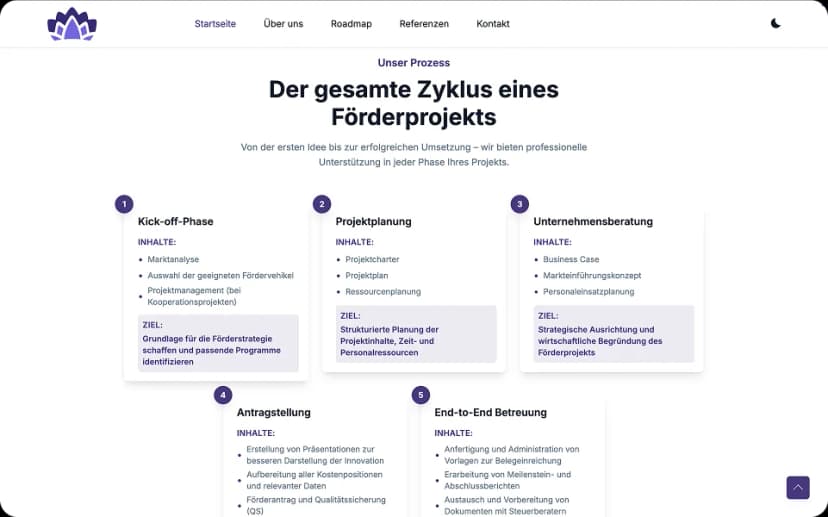
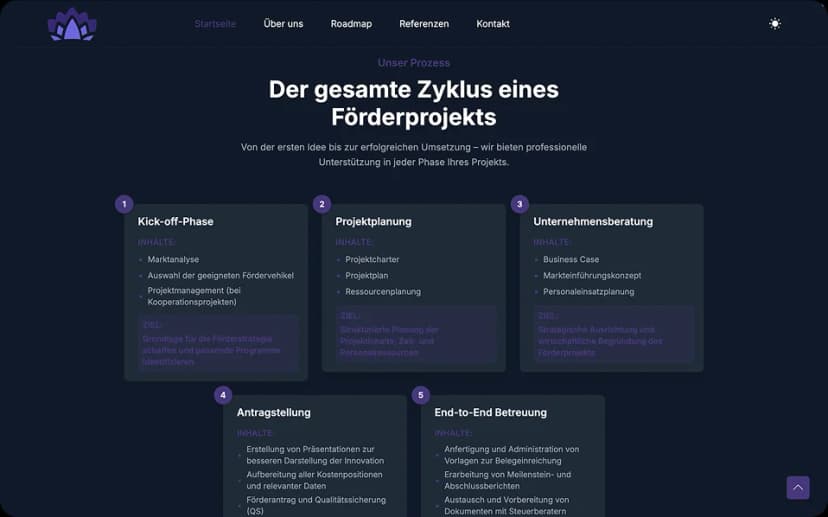
- Clear journeys for each ICP: Fördermittel-Check (lead magnet), Fördermittel-Beratung (service explanation), Förderprogramme (deep programme pages), Für wen? (target-group specific landing pages)
- Section patterns that lead users step by step: From "What is funding?" → to "Which program fits?" → to "How do we apply together?"
- Multi-step, validated contact forms with structured data capture
- Strong use of social proof via success stories, volumes, and expertise signals
Typography, contrast, and spacing focus on clarity and authority.
3. Performance & Core Web Vitals
Speed builds trust. We optimized for Core Web Vitals from day one.
Latest Lighthouse audit (Mobile, Slow 4G, Lighthouse 13):
• Performance: 98 / 100
• LCP: 2.3 s
• FCP: 1.2 s
• TBT: 30 ms
• CLS: 0.003
• Speed Index: 3.3 s
How we achieved it:
- SSR with modern Next.js and minimal blocking JS
- next/image everywhere with WebP/AVIF and responsive sizes
- Lazy loading for non-critical media, preloading hero assets
- Dynamic imports for 14+ components to keep bundle size low
- Removal of legacy polyfills and unused JS (~45 KB saved)
- Explicit width/height on images → near-zero layout shifts
- font-display: swap and preloaded core fonts to avoid invisible text
Result: fast and stable even on mid-range Android devices on slow 4G.
4. Security, Compliance & GDPR
The platform represents a regulated advisory brand. We built it with a security-first mindset:
• Hosting & infra: Vercel, isolated environments, HTTPS-only, HSTS
• Secrets: client/server separation, no secrets in the browser
• App security: CSP-ready, COOP/COEP, server-side escaping by default
• Forms: encrypted transport, server validation, honeypot spam protection
• Privacy & GDPR: minimal data, explicit opt-ins, EU-only storage
- This gives Forschungsmittel a technically credible security posture that matches the expectations of German enterprises and research institutions.
5. SEO Architecture & Content Strategy
The goal was topical authority, not just rankings.
We built a topic-first, intent-driven system.
Key elements:
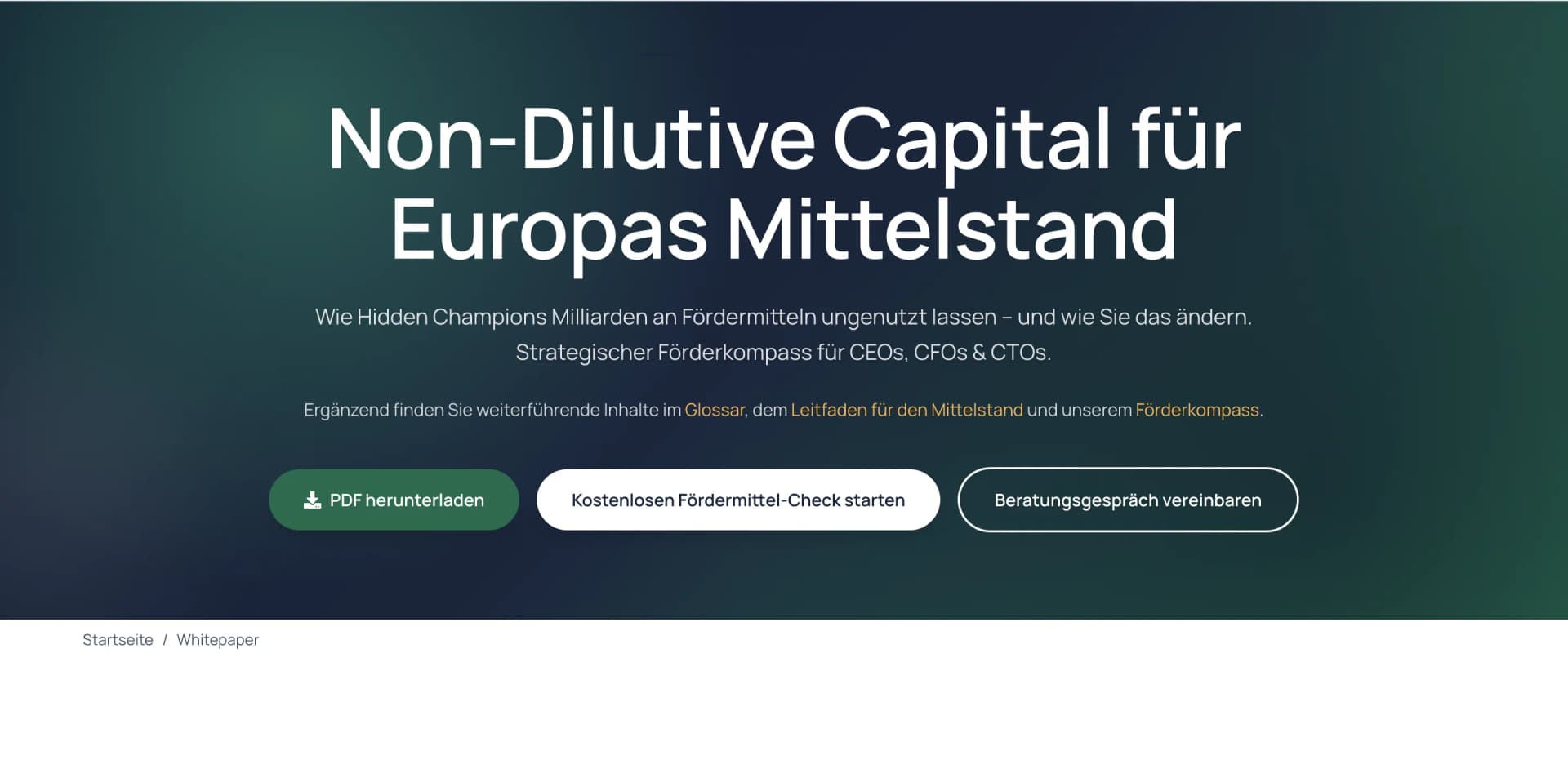
- Clear intent clusters: Advisory & transactions (Fördermittel-Beratung, Fördermittel-Check, Kontakt), Programme cluster (ZIM, KMU-innovativ, EXIST, Digital Jetzt, WIPANO, Horizon Europe), ICP cluster (Unternehmen, Forschungseinrichtungen, Startups), Knowledge cluster (Whitepaper, Förderkompass, Leitfaden Mittelstand, Glossar), Case studies & authority content
- Information architecture as "funding journey": From first research → to understanding programmes → to ICP-specific guidance → to advisory & check
- Internal linking strategy: Minimum 6 internal links per important page, Strong central hub in /foerdermittel-beratung, Program pages interlinked and always leading back to advisory & check, Glossary and resources acting as authority feeders into commercial pages
- Structured data (Schema.org): Organization, WebSite, WebPage, BreadcrumbList globally, Service markup for advisory & program pages, FAQPage for Q&A-heavy sections, Article + ItemList for knowledge cluster and case studies
The result is a focused semantic system around Fördermittel.
Results
- Measured increase in user inquiries via contact forms and the Fördermittel-Check during the initial post-launch phase
- Improved organic visibility for key funding-related search queries, including advisory and application-focused terms
- Core Web Vitals within the recommended ranges under standardized Lighthouse mobile test conditions
- A flexible architecture ready for: deeper marketing automation, CRM integrations (e.g. HubSpot), expanded program and content clusters
- A platform that better reflects the scope and positioning of the consultancy
Results depend on market conditions, user behavior, and ongoing optimization. Past outcomes do not guarantee future results.
Key Takeaways
- Traditional consulting can look and behave like SaaS – without losing its credibility.
- Investing in architecture, performance and security from day one pays off in both SEO and lead quality.
- A carefully designed topic & cluster strategy turns a website into a genuine knowledge platform, not just a digital brochure.
- With a modern stack (Next.js 16, React 19, Tailwind) and CI/CD-first mindset, professional service firms can iterate as fast as startups – without accumulating technical debt.
Tech Stack (Summary)
Framework & Frontend: Next.js 16 (App Router, Server Components, ISR), React 19, TypeScript, Tailwind CSS, Framer Motion
Content & CMS: MDX-based content, Markdown pipelines, reusable components for services, programmes, ICPs, and case studies
Hosting & CI/CD: Vercel (Edge network, CDN, HTTPS, HSTS), automated CI/CD with previews, linting, type-checking, Lighthouse gates
Security & Compliance: HTTPS everywhere, CSP-ready, COOP/COEP, secure form handling, GDPR-compliant data flows
Performance: Image optimization (WebP/AVIF), dynamic imports, minimal blocking JS, font & layout stability
Analytics (ready for expansion): Event-based tracking for key CTAs, cookie consent infrastructure, structured data for Search